

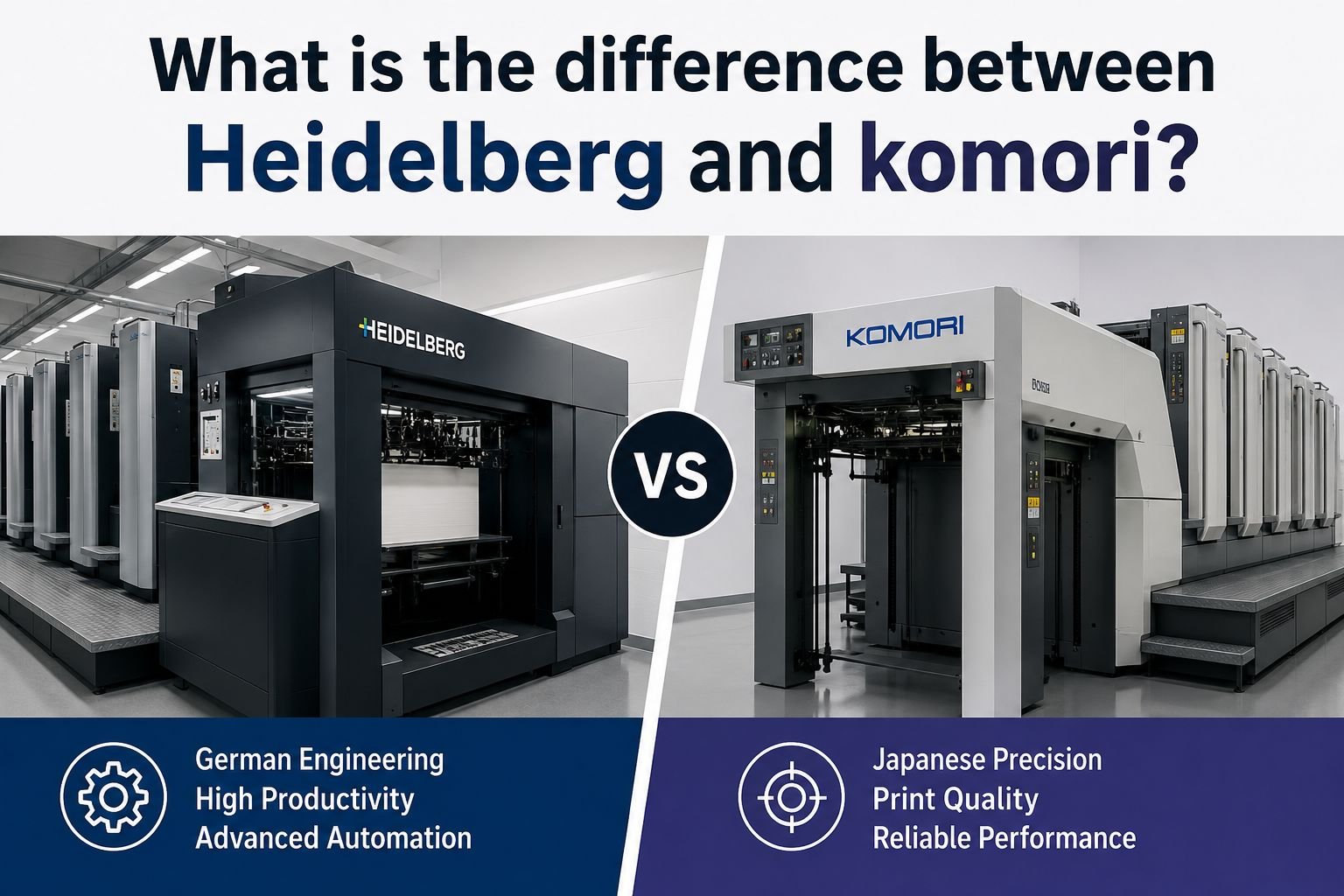
What is the Difference Between Heidelberg and Komori Machine?
Choosing the right printing press in the commercial printing business has a dramatic influence on printing quality, production times, operational costs, and overall business efficiency. Heidelberg and Komori are two of the top manufacturers in the world and are known as reliable suppliers of high performance printing equipment. Heidelberg and Komori both produce some of the most sophisticated offset printing machine models for a wide variety of business needs, but they possess individual strengths that set them apart.
Regardless if you are starting your printing business or are upgrading the equipment in your existing printing business, knowing the differences between these two printing industry leaders will help you make an informed decision when investing in either brand.
About Heidelberg
For over 170 years Heidelberg has been a German manufacturer of printing equipment, specializing in the commercial printing market. They are known for their innovative design, precision craftsmanship and automated controls; there are Heidelberg presses operating in every sector of the commercial, packaging, and publishing industries throughout the world.
Heidelberg offset printing machines produce exceptionally high quality prints and provide consistent performance, and they integrate seamlessly into the customer's workflow. The company continues to invest heavily in digitally enabled products, artificial intelligence driven production management and environmentally sustainable printing technologies.
Unique Characteristics of Heidelberg
- Unmatched accuracy of printing and consistency of colours
- High level of automation; little , if any, manual operation is required.
- Exceptional resale value
- Integration into modern digital workflows
- Widespread global service/support network
Printing businesses that need very high-quality printed material and produce their products at the greatest rate usually choose a Heidelberg machine.
About Komori
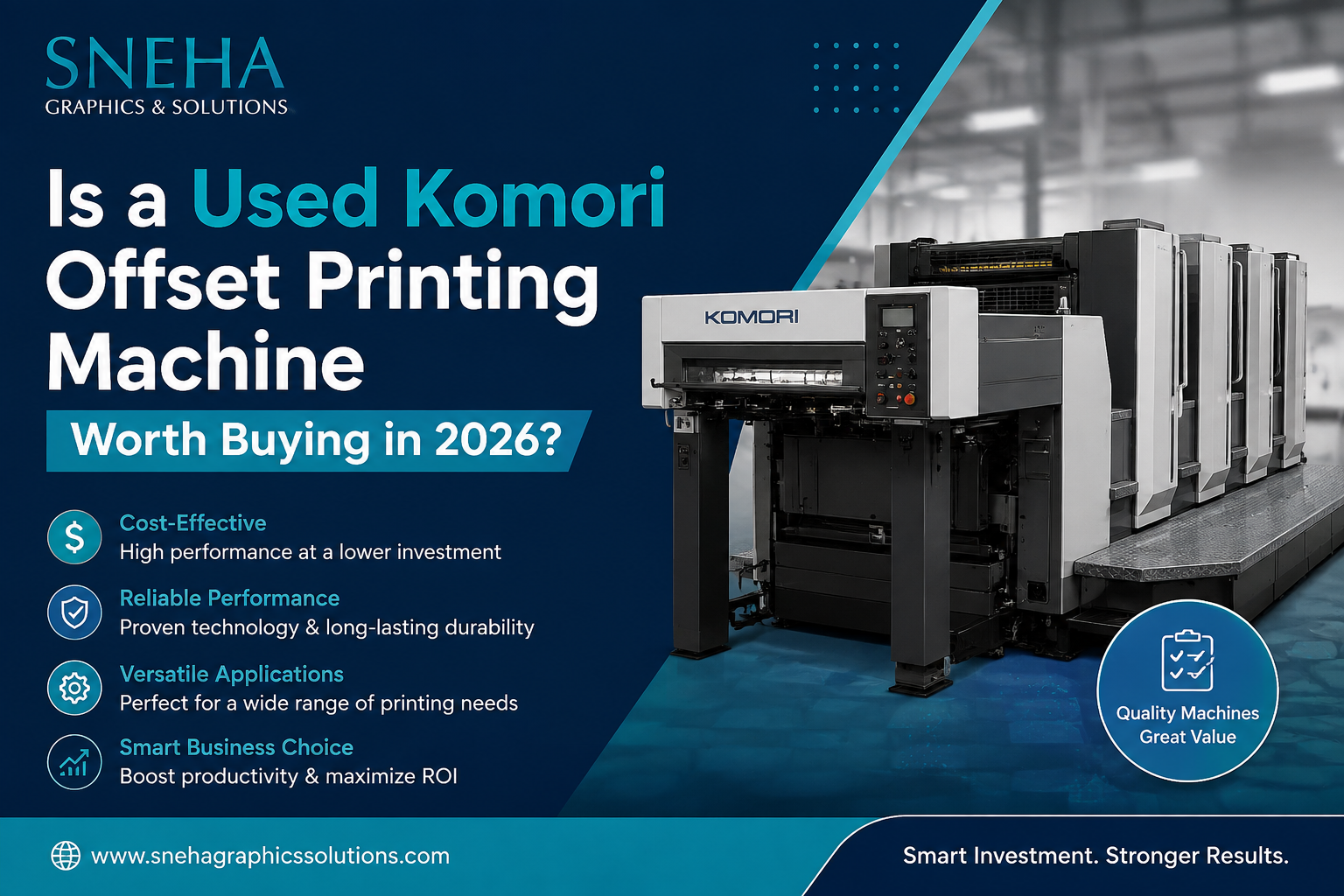
Komori is a printing press company out of Japan that manufacturers high-quality, durable, and energy-efficient printing equipment. Since its inception in 1923, Komori has established itself as a leader in the industry based on the reliability of their products and ability to provide cost-efficient production.
KOMORI offset printing machines are renowned for their reliability, quick turnaround times and lower operating costs. This type of machine is especially popular with commercial printers and packaging companies due to the ability to produce a large number of high-quality prints quickly.
The following are some of the most common features found in KOMORI offset printers:
- High print speed
- Energy-efficient operation
- Ease of use
- Reliable operation for long production runs
- Competitive maintenance costs
One of KOMORI’s primary business goals is to minimize waste while maximizing production volume.
Heidelberg vs Komori: Detailed Comparison
1- Print Quality
Both brands provide excellent print quality but Heidelberg has a slight edge for ultra-precise work.
Heidelberg press equipment provides incredible accuracy of colour when printing luxury packaging, top of the line brochures, magazines and high quality commercial pieces.
Komori also provides excellent results with brilliant colour and sharp image quality and will be suitable for the majority of commercial printing.
Winner - Heidelberg for Colour-critical printing of premium products.
2 - Speed and Productivity
Komori printing press equipment is designed for speed of increasing production levels and fast job changes, so producing a very small amount of downtime and increasing daily production capacity.
Heidelberg press equipment is also known for productivity, however this is to do with their ability to automate processes and optimise workflows as opposed to raw speed of production.
Winner - Komori for High-volume production output.
3. Automation
Modern printing has significantly changed due to the introduction of automation.
Because of this, Heidelberg systems incorporate sophisticated automated functionality including:
- Automatic plate changing,
- AI-assisted production monitoring,
- Intelligent quality control,
- AND remote diagnostic capability.
Komori systems do have some automation, but the focus is often geared towards simplifying the operation rather than providing the maximum level of digital integration.
Advantage: Heidelberg.
4. Maintenance
Some users like the fact that they do not have to perform as much maintenance on their Komori press as compared to a Heidelberg press.
In addition, parts for Kormori Presses generally cost less than parts for Heidelberg Presses, while Komori’s solid construction generally results in less unexpected press down time.
Companies should take into account how easily they can obtain service personnel in their area before they decide to buy a press.
Advantage: Komori due to cost.
5. Operating Cost
The operational costs associated with operating a press include the cost of electricity, consumables, maintenance and spare parts.
In general, Komori systems use less energy and are less expensive than Heidelberg systems for long-term continuous production.
Heidelberg systems due to their automated advantages tend to have much higher operating costs than Komori systems.
Advantage: Komori.
6. Technological Advancement
Heidelberg has established its position as a leader in the Industry 4.0 movement. Its presses can be seamlessly integrated with:
• Cloud-based Production Management
• Predictive Maintenance
• Automated Workflow Software
• Digital Press Monitoring
Komori has also taken steps to integrate modern technologies into their press designs, with a focus on keeping things simple and producing stable products.
Winner: Heidelberg
7. Press Longevity
Both brands produce presses that are extremely durable and can last for decades if properly maintained. Many Heidelberg and Komori presses are still in operation after 20 to 30 years of service. This makes either brand's press a very solid long-term investment.
Result: Tie
8. Price:
The purchase price of an offset press is one of the largest deciding factors for buyers.
In general:
• Heidelberg presses tend to be more expensive because of the high-quality engineering and advanced automation.
• Komori's presses typically have a lower initial investment and are known to have good value for the money.
There are factors that can affect the price of both brands of presses including:
• Number of Colors
• Size of Paper that can be printed on
• Degree of Automation
• New vs Used Press
• Accessories Included
When evaluating the price of either press, customers should evaluate the total cost of owning the press instead of only considering the purchase price.
Which Packaging Machine is Superior?
Printing requires a high level of consistency in quality, precision in registration, and high-speed production.
Heidelberg and Komori have excellent products in the packaging category.
A 5 color offset printing machine from either manufacturer can efficiently handle:
- Cartons
- Labels
- Food Packaging
- Pharmaceutical Product Packaging
- Cosmetic Product Packaging
If you're looking for a machine with a high level of automation and a large number of premium finishing options, consider Heidelberg.
If you are more concerned with how fast the production process is or how efficient the operation is, consider a Komori.
Advantages of Offset Printing
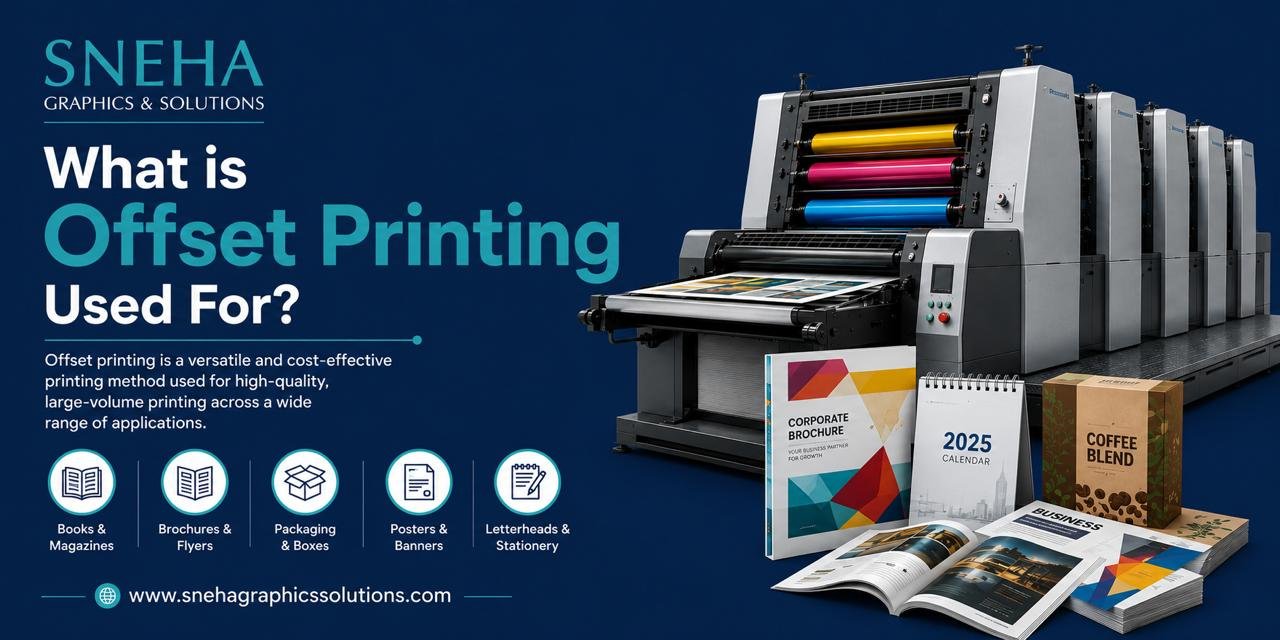
Offset presses have been used for large-scale commercial production and are still very popular today, even with the growth of digital printing. There are several advantages of Offset Printing:
- High Quality Prints
- Cost Effective with High Volume Runs
- Consistent Colors
- Many Paper Substrates Available
- Longer Plate Life
- Fast Production for Bulk Orders
- Sharpness of Images and Text
Because of these advantages, Offset Printing is the preferred method for producing all types of newspapers, books, magazines, brochures, packaging, and marketing material.
Future of Offset Printing Industry
The future of offset printing industry appears to be bright as suppliers keep developing more advanced automations, using eco-friendly production materials and methods and providing advanced technology solutions like AI-based print management systems.
There are many areas that will influence the future state of offset printing:
- Greater levels of automation
- Uses of environmentally friendly inks and materials
- Decreased production waste
- Printing systems connected through the internet
- Predictive machine maintenance
- Hybrid solutions to printing
- Digital integrations into print workflows
Digital continues to be at the forefront of short-run printing growth. Conversely, offset printing will continue to be preferred for long-run production due to its high-volume and high-quality capabilities.
Final Thoughts
Both Heidelberg and Komori are premier printing press manufacturers, so you cannot say one is better than the other. In comparison to Komori's speed, efficiency, and cost effectiveness, Heidelberg is known for automation, precision, and top quality prints. The correct press for your business will depend on your print volume, budget, and goals.
If you need assistance in picking out a printing machine or require customized, dependable printing solutions that meet your needs, please contact Sneha Graphics & Solutions to help you make the best decision about a printing press that will yield the most productivity and profit potential for your company.